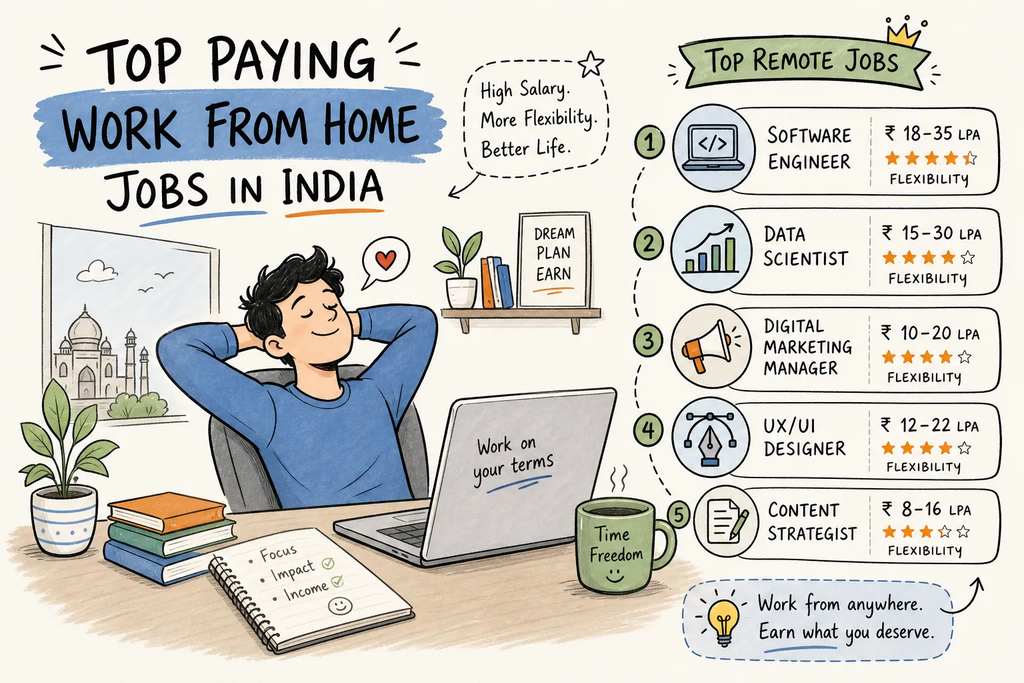
The five best-paying positions to work from home in India right now are software developer (₹5–25+ LPA), data analyst (₹4–18 LPA), digital marketer or SEO specialist (₹3–12 LPA), content writer (₹2.5–9 LPA), and customer support executive (₹2.5–6 LPA), according to 2026 aggregated market data from portals including Shine, Cutshort, and Naukri. This guide maps the full remote work landscape by salary, required skills, and flexibility, so you can identify the roles that actually fit your situation and start applying with a clear plan.
Remote work in India has matured significantly, and the difference between a scammy “work from home” post and a legitimate, well-paying virtual job is now substantial. Knowing where to look and what to look for is half the battle. Platforms like The Four Tabs make it easier to browse curated, India-filtered remote listings, reducing noise and irrelevant results. By the end of this article, you will know which positions to work from home suit your skills, what pay to realistically expect, and exactly where to apply.
Key takeaways
- Realistic starting pay: Most beginners working for India-based companies should expect ₹15,000–₹30,000 per month as a starting point (based on 2026 listings data from portals such as Shine and Cutshort).
- International clients pay more: Indian freelancers serving UK, US, or Australian clients often earn significantly more in rupee terms, but income is less stable.
- Portfolio beats certificates: Employers prioritise demonstrated output and remote-work habits over certificate collections.
- Scams are rising: Any upfront payment request is a guaranteed red flag; legitimate employers do not charge candidates to get hired.
- Use curated platforms: Filtered directories like The Four Tabs reduce noise and surface vetted, India-specific listings worth your time.
Top positions to work from home in India, ranked by pay
High-paying remote opportunities cluster in technology, analytics, and AI, while mid-tier roles span digital marketing, content, education, and finance. Salary is shaped by three variables: your experience level, your employer type (Indian startup versus MNC versus international client), and whether the role is salaried or freelance. Understanding where you sit across these variables before you apply will save you from accepting well below your market rate. Telecommute jobs in tech and data are especially well paid, and at-home careers in content and digital marketing offer a solid entry point for those building their remote work profile.
High-earning roles: tech, data, and AI
Software development, data analytics, AI and ML engineering, and cloud engineering sit at the top of the remote pay scale. Common job titles include Full-Stack Developer, Data Scientist, Cloud Engineer, and DevOps Engineer.
Mid-tier earners: digital marketing, content, education, and finance
Digital marketing executives, SEO specialists, content writers, online tutors, and remote finance or accounting professionals form the mid-tier band. Online tutors and subject-matter experts earn based on hours, platform, and subject: STEM tutors consistently command higher rates than general academic tutors.
What do salary ranges actually look like across common remote roles?
Remote pay in India is highly variable. Entry-level candidates typically land near the lower bound; specialisation, international clients, or night-shift premiums lift pay significantly.
How experience affects positions to work from home
The experience gap is real and wide. Similarly, a junior QA tester doing manual checks earns far less than an automation engineer writing Selenium or Playwright scripts. Anchor your expectations on the lower bound of your experience band and negotiate upward with a portfolio that shows measurable outcomes.
When working for international clients changes the equation
Indian freelancers and contractors serving UK, US, or Australian clients often earn significantly more in rupee terms due to exchange rates. The trade-off is real: income is less stable, employer benefits are absent, and invoicing, GST compliance, and foreign remittance management add layers of complexity that salaried employees typically do not deal with. Upwork, Toptal, and Fiverr are established routes to international remote work. That said, the first six to twelve months of client-building are typically slow before income becomes consistent.
What skills and tools do employers actually screen for?
Employers hiring for remote positions prioritise two things: role-specific technical ability and evidence of independent, asynchronous work habits. This applies whether you are targeting tech roles, digital marketing positions, or customer-facing at-home careers. Certificates are supporting evidence, not substitutes for demonstrated output, build a portfolio alongside any upskilling and treat it as your primary sales document.
Universal remote-work habits that matter most
Every remote employer expects strong written communication: clear emails, Slack messages, and proactive status updates. Self-management, the ability to meet deadlines without close supervision, is assessed during the hiring process itself. A slow or vague email response signals poor remote habits before you have even had a formal interview. Digital adaptability and remote professionalism also matter: reliable internet, appropriate video-call etiquette, and consistent responsiveness separate candidates who get offers from those who do not.
Role-specific tools and certifications worth prioritising first
Focus on the tools your target role uses most, then build certifications around them:
- Tech and data: Python, SQL, Git, Jira, GitHub, Tableau, or Power BI
- Digital marketing and SEO: Google Analytics, Search Console, Google Ads certification, HubSpot certifications
- Customer support: Zendesk, Freshdesk, Intercom
- Design and content: Figma, Adobe Creative Cloud, Canva, any major CMS
- Project management: Google Project Management Certificate, Scrum basics, Asana or Trello
List specific tools and measurable outcomes on your CV, never vague claims. “Built weekly dashboards in Looker Studio that reduced reporting time by 40%” is far stronger than “familiar with analytics tools.” Specificity is what separates shortlisted candidates from rejected ones.
Full-time, freelance, or part-time: which contract type fits your situation?
Work-from-home roles cover three distinct contract structures, each with different income stability, flexibility, and legal implications. Choosing the right type depends on your financial situation, risk tolerance, and experience level, not just on which option sounds most appealing.
Salaried remote jobs: stability and structure
Full-time remote employment offers a fixed salary, defined working hours, and a leave policy. Where an employer and employee meet the statutory coverage conditions, based on establishment size and wage thresholds, PF and ESI contributions also apply; check current guidelines from the EPFO and ESIC to confirm whether your prospective role qualifies. These roles suit candidates who want income predictability and career progression within an organisation. Many Indian startups and MNCs now offer fully remote or hybrid salaried positions across tech, marketing, HR, and operations. If income stability is your priority, a salaried remote role is the right starting point.
Freelance and part-time remote work: flexibility with trade-offs
Project-based and gig work through marketplaces can exceed salaried equivalents once a client base is established, but the first six to twelve months are typically slow and require active portfolio-building. Part-time roles, common in customer support, tutoring, and content writing, offer a middle ground for candidates balancing other commitments or upskilling on the side. Freelance income is variable and excludes employer-contributed benefits, so financial planning becomes your responsibility entirely.
Where to find legitimate positions to work from home in India
The sheer volume of job boards makes it easy to waste hours on poorly curated or outdated listings. The focus here is on platforms that genuinely serve Indian job seekers, not global boards that block India-based applicants or bury them in location-restricted results.
India-focused platforms and what each does well
LinkedIn remains the most reliable starting point: use the Remote filter and always verify the employer’s posting history before applying. Naukri offers high volume but requires cross-checking employers, as aggregated listings can be outdated. Internshala is the best option for freshers and entry-level roles, where employer identity is usually clear. Cutshort is strong for tech and startup hiring, while Wellfound covers startup remote roles, including early-stage companies with fully distributed teams. For global remote-only boards, We Work Remotely, Himalayas, and Remotive are reliable options with country filters worth exploring.
Finding curated, location-filtered listings without the noise
Most job boards mix legitimate remote roles with poorly described listings, commission-only “opportunities,” and location-vague postings that waste your time. The Four Tabs addresses this with its curated Jobs and Careers vertical, which aggregates over 1,000 listings from verified providers, filters by location for India-specific results, and presents clean, structured listing data in one place. Browse curated remote positions on The Four Tabs and filter by industry or role type to find openings that match your skill set, a practical approach for candidates who want to apply with confidence rather than scroll through unfiltered boards.
How to protect yourself from remote job scams
Work-from-home job scams are rising sharply in India in 2026, and they follow predictable patterns that are straightforward to spot once you know what to look for. This section is worth reading carefully before you apply to any remote opportunity.
Red flags in a job listing or recruiter message
Treat the following as automatic warning signs:
- Any upfront payment for registration, training, software, or equipment
- Vague job descriptions such as “online tasks” or “easy work” with no manager or team mentioned
- Unusually high pay for minimal experience or simple tasks
- A recruiter using a Gmail address or look-alike domain instead of a corporate email
- Communication limited to WhatsApp or Telegram with no formal interview
- Pressure to decide immediately or threats that the offer will expire
- Requests for OTPs, banking credentials, or sensitive documents before an offer is verified
A quick verification checklist before you apply
Search the company name independently and find its official website without using any link the recruiter sent you. Confirm that the same vacancy exists on the company’s own careers page and that the job title, responsibilities, and application process match what you were told. Inspect the recruiter’s email domain character by character and compare it with the domain on the official website: extra hyphens, misspellings, and look-alike characters are common scam tactics. Check the recruiter’s LinkedIn profile for a credible work history and genuine connections within the company.
Search the company name alongside terms like “scam,” “fraud,” or “fake offer letter” to surface complaints before you invest time in an application. Legitimate employers do not charge candidates, and hiring normally includes a formal interview or skills assessment. If banking details have already been shared in error, call your bank immediately and report the incident to India’s cybercrime helpline 1930 or the National Cyber Crime Reporting Portal.
Start your search for the right positions to work from home
Remote work in India is a genuine and growing opportunity, but it rewards candidates who match the right role to their skills, understand realistic pay expectations, and apply through trustworthy channels. The roles are there, the advantage goes to those who apply strategically, build verifiable portfolios, and protect themselves from scams.
Your action plan is straightforward. Identify one or two certifications or tools to add to your profile this month. Then use a curated platform like The Four Tabs to browse vetted, India-specific listings, it aggregates roles across its Jobs and Careers vertical with location-based filtering, so you see positions that are actually open to candidates in India. Shortlist roles that match your skills and start building the portfolio that will make your application stand out.
Frequently Asked Questions
How long will it take for freelance income to become steady?
We recommend you expect the first six to twelve months to be typically slow before freelance income becomes consistent. During that period you will usually be building a client base and a portfolio, after which earnings can rise above salaried equivalents for established freelancers.
Which should we prioritise first: tools, certifications or a portfolio?
We advise you to prioritise tools and demonstrable output over certificates, and to build a portfolio alongside any upskilling. Employers treat certifications as supporting evidence; specific tool proficiency and measurable outcomes on your CV matter far more when being shortlisted.
