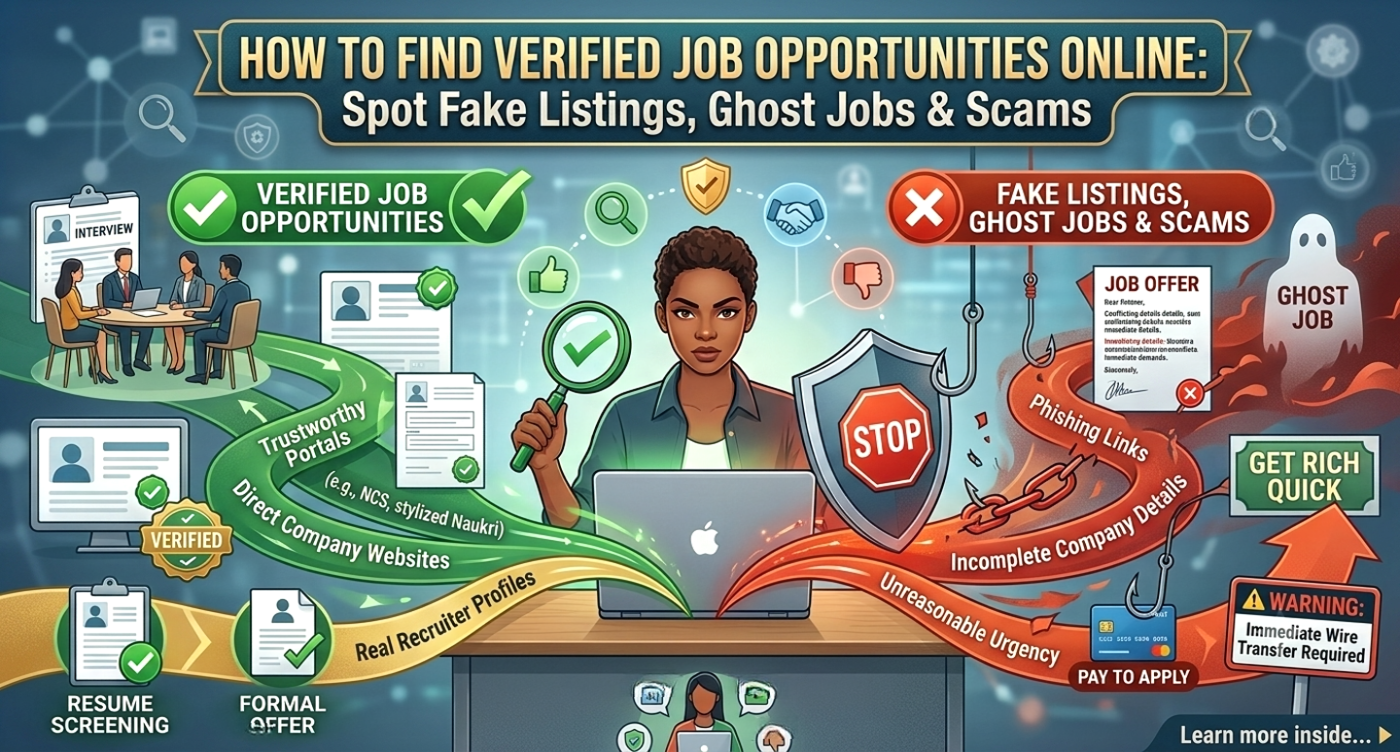
It usually starts on a quiet Sunday afternoon. You scroll through an online employment portal, tweaking your resume slightly before clicking “Apply” on twenty different listings. By Tuesday morning, two emails hit your inbox.
The first offers $48 an hour for an entry-level administrative job, adding a quick request to conduct your “interview” over a Telegram chat thread. The second email comes from a staffing agency asking you to sign up on a random portal to unlock “priority profile routing.”
Neither message is a job opportunity.
The Telegram offer is an outright financial trap designed to drain your bank account through a bogus equipment check. The recruitment agency message is an aggressive data-harvesting ploy built to gather candidate emails and inflate internal metrics.
As hiring teams shifted toward automated applicant trackers and virtual interviews, public job boards turned into a mess of stale postings, ghost listings, and active scams. Finding genuine employment now requires looking past convenient one-click buttons and applying a simple verification check before submitting your info.
The Reality of Online Job Fraud: What the Numbers Tell Us
Modern job scams rarely look like obvious spam. Scammers regularly mirror corporate branding, fake recruiter profiles on professional networks, and generate polished offer letters.
The financial scale behind this problem keeps growing:
- Escalating Losses: Federal Trade Commission (FTC) data shows that employment and business opportunity scams account for tens of millions in reported losses every year.
- The Fake Equipment Check: The most common financial trap starts when an employer mails you a realistic-looking cashier’s check to cover home-office hardware. You deposit it, transfer money to their “approved vendor,” and watch the check bounce five days later—leaving you legally responsible for the entire spent balance.
- Data-Harvesting and Ghost Roles: Staffing industry research reveals that a staggering number of long-term postings aren’t active openings. Companies regularly maintain “ghost jobs” simply to collect resumes, build future talent backlogs, or project an illusion of steady growth to market rivals.
THE FAKE CHECK SCAM WORKFLOW

[ Unsolicited Text / Chat Interview ]
                  │
                  ▼
[ Instant Job Offer (No Voice / Video Call) ]
                  │
                  ▼
[ Fake "Equipment Check" Mailed to Candidate ]
                  │
                  ▼
[ Candidate Deposits Check & Wire-Transfers Funds to "Vendor" ]
                  │
                  ▼
[ Check Bounces Days Later ➔ Candidate Is Liable for Spent Cash ]
4 Rapid Steps to Verify Any Job Posting
Run any job ad through these quick checks before tailoring your cover letter or handing over contact details.
1. Cross-Check the Corporate Portal
Never rely on an ad existing only on an aggregator site. Open a blank tab, search for the hiring company’s primary website, and open their dedicated careers page ([company.com/careers](https://company.com/careers)).
If a job site claims a brand is hiring twenty remote workers, but their official portal shows zero open roles, move on. Legitimate employers host active openings directly on their primary Applicant Tracking Systems like Workday, Greenhouse, Lever, or iCIMS.
2. Inspect the Recruiter Email Header
Fraudsters often hijack the names of actual HR directors listed on corporate “About Us” pages.
Check the sender’s exact address. If outreach comes from a free webmail service ([email protected]) or a domain with subtle letter swaps (@brand-careers.com instead of @brand.com), it’s a red flag. Real corporate communication originates from the official business domain.
3. Evaluate the Interview Setup
Real companies interview candidates through phone calls, structured video meetings on Zoom or Microsoft Teams, or in-person office visits.
If a recruiter insists on keeping the entire interview restricted to text messaging channels like Telegram, Signal, or WhatsApp, stop communicating. No established firm or funded startup extends real employment offers over an anonymous text thread.
4. Watch How Money Moves
Money flows from the employer to the employee. Never the other way around.
If an employer asks you to pay upfront fees for background checks, software tools, training packages, or office equipment, you’re looking at a scam. Genuine employers supply hardware directly or cover vetting costs behind the scenes.
Spotting Real vs. Fraudulent Job Listings
| Evaluation Point | Verified Job Opportunity | Fraudulent or Ghost Listing |
| Application Link | Directs to verified ATS portals (Greenhouse, Lever) | Redirects to suspicious third-party lead forms |
| Role Description | Clear duties, measurable goals, realistic qualifications | Unfocused tasks (“simple data typing,” “payment handler”) |
| Salary Benchmarks | Aligned with standard industry pay scales | Unusually high pay offered for low skill levels |
| Interview Process | Multi-step video or phone panel discussions | Instant job offer right after answering a text quiz |
| Email Domain | Matches official company domain (@company.com) | Free or altered domain (@gmail.com, @job-brand.com) |
Where to Find Truly Verified Job Listings
Skip the clutter on open job aggregators by focusing your search on direct, vetted channels:
- Official Company Career Pages: Pick 20 to 30 companies you actually want to work for. Visit their career pages directly once a week, or set up job notifications right on their main site.
- Curated Tech & Niche Boards: Stick to platforms that manually vet employers—like Built In (for tech and startup roles), Wellfound (vetted startup positions), or FlexJobs (manually verified remote work).
- Direct Outreach to Department Leads: Bypass crowded public queues entirely. Find team managers on professional networks, drop them a concise note mentioning a project you built, and ask if their team is planning any hiring in the coming months.
What to Do If You Encounter a Scam
Realized you were dealing with a fake employer? Take these steps right away:
First, cut off communication completely. Don’t reply to messages, don’t submit forms, and don’t send cash.
Next, call your bank’s fraud team if you deposited a suspicious check or handed over routing numbers. They can help lock down your accounts before damage spreads.
Finally, report the profile on whichever job site you found it, and file a report with your local consumer protection or cybercrime agency.
Frequently Asked Questions
What are “ghost jobs” and why do companies post them?
Think of a ghost job as a corporate placeholder. A business publishes an authentic-looking ad with zero intent to hire anyone this month—or even this quarter.
HR teams do this to build a ready pool of applicants before an actual opening pops up. In other cases, leadership leaves listings active simply to project an image of steady expansion to investors and competitors.
Is it safe to include my address or national ID on a preliminary application?
No. Standard applications only require your name, professional email, phone number, city/state location, and work history.
Sensitive details like Social Security numbers, government IDs, or banking details belong strictly inside secure onboarding portals after you’ve formally accepted an offer.
How can I verify if a remote recruiter on LinkedIn is genuine?
Take a close look at their profile history, activity feeds, network connections, and career timeline.
Legitimate recruiters post regular hiring updates, connect with colleagues at their stated company, and maintain a complete work history. When something feels off, contact the company’s main HR department directly to confirm whether the recruiter actually works there.
