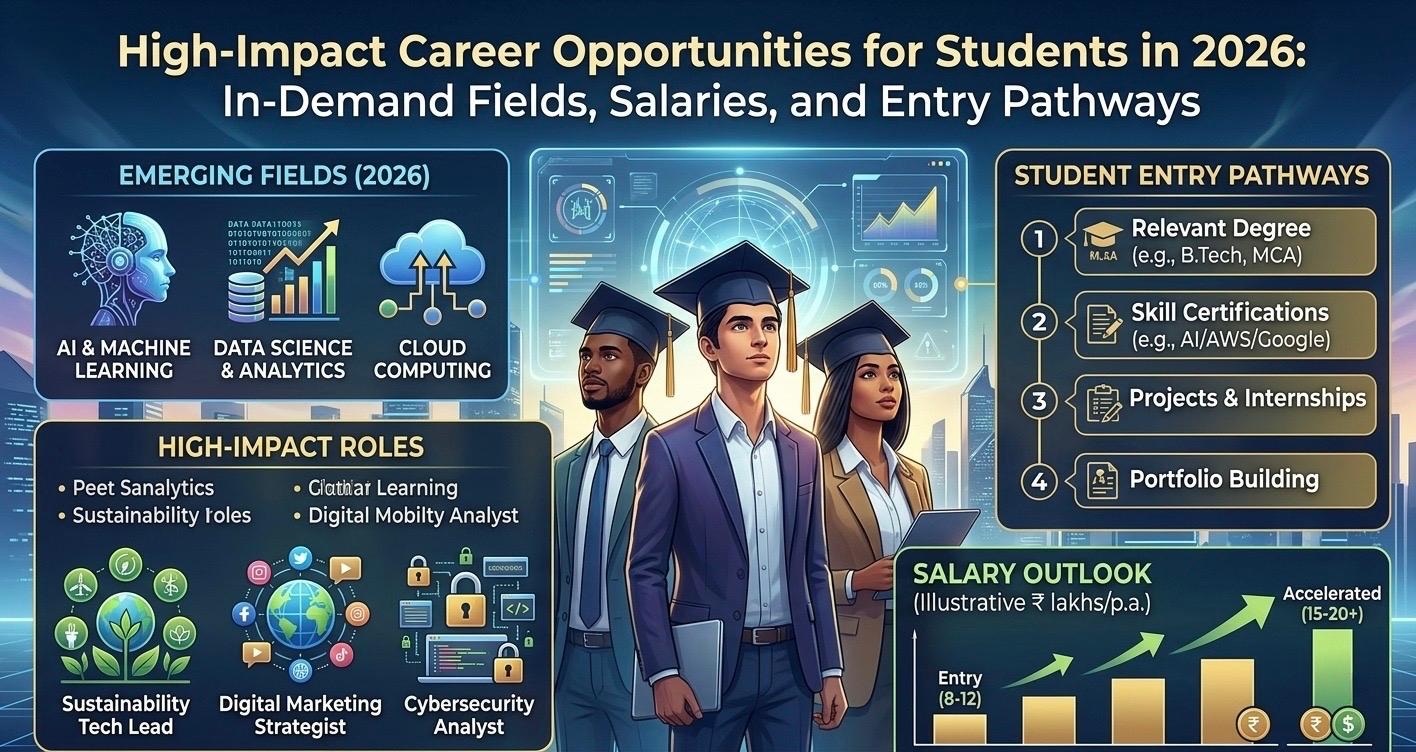
Building a career while studying—or launching one immediately after graduation—no longer requires waiting for traditional campus placement drives. The rapid adoption of remote workflows, specialized AI tooling, and decentralized business models has created flexible, high-paying pathways for students across technical and non-technical disciplines.
However, navigating early-career choices can be overwhelming. Landing a meaningful role requires aligning your current studies with real market demand, prioritizing hands-on portfolio work over basic course certificates, and knowing where to search.
Below is a practical breakdown of the top student career tracks in 2026, including realistic compensation expectations, core skill requirements, and practical action steps.
Overview: Top Early-Career Tracks at a Glance
| Career Track | Target Majors / Disciplines | Common Entry Roles | Average Starting Pay / Hourly Rate | Remote Availability |
| Applied AI & Data Curation | CS, Data Science, Math, Linguistics | AI Trainer, Data Annotation Specialist, Prompt Tester | $20 – $45 / hr (₹15K – ₹40K/mo) | Very High |
| Digital Marketing & Growth | Business, Communications, Design | SEO Assistant, Social Media Strategist, Performance Marketer | $18 – $35 / hr (₹12K – ₹30K/mo) | High |
| Software Development & Testing | CS, IT, Software Engineering | Frontend Developer Intern, QA Tester, App Developer | $25 – $60 / hr (₹20K – ₹60K/mo) | High |
| Business Development & Operations | Any Major, Finance, Management | SDR Intern, Operations Coordinator, Virtual Assistant | $15 – $30 / hr (₹10K – ₹25K/mo) | Moderate to High |
| UI/UX & Visual Design | Design, Fine Arts, HCI | Junior UX Researcher, Graphic Designer, Figma Specialist | $20 – $40 / hr (₹15K – ₹35K/mo) | High |
1. Applied AI, Data Management, and Model Training
The rise of generative AI has created a vast demand for human verification, dataset curation, and domain-specific model evaluation. You do not need a Ph.D. in machine learning to enter this field; tech companies regularly hire undergraduate students to refine domain models.
- What the work involves: Writing complex domain-specific prompts, evaluating AI outputs for accuracy, labeling dataset edge cases, and testing user experience flows.
- Key skills needed: Analytical reasoning, precise written communication, domain expertise (e.g., coding, legal drafting, or scientific reasoning), and basic Python knowledge.
- Why it suits students: Highly flexible hours and remote project-based contracts allow seamless balancing with university coursework.
2. Digital Marketing, Content Engineering, and SEO
Modern marketing relies on data-driven execution rather than pure creative intuition. Startups and established brands hire students who understand search mechanics, platform analytics, and audience retention strategies.
- What the work involves: Managing content calendars, auditing technical SEO on websites, managing paid ad campaigns, and analyzing user engagement metrics.
- Key skills needed: Google Analytics 4, basic HTML/CSS, copy editing, keyword research tools (Ahrefs, Semrush), and visual design tools (Canva, Figma).
- Who this suits best: Students in communications, journalism, or business who enjoy mixing creative writing with data analysis.
3. Remote Software Engineering & QA Testing
Tech teams increasingly hire student interns for specialized maintenance, automated testing, and frontend feature delivery.
- What the work involves: Writing unit tests, fixing non-critical UI bugs, building reusable React components, and documenting API endpoints.
- Key skills needed: Git/GitHub version control, JavaScript/TypeScript, Python, and familiarity with CI/CD deployment pipelines.
- How to stand out: Build two or three polished, deployed web applications rather than listing dozens of unverified tutorial projects on your resume.
4. Business Development, Sales (SDR), & Operations
For non-technical students, business development and customer success offer direct pathways into venture-backed startups and corporate environments.
- What the work involves: Identifying target accounts, conducting market research, organizing lead outreach campaigns, and coordinating client onboarding.
- Key skills needed: CRM management (HubSpot, Salesforce), cold email drafting, strong phone presence, and workflow organization.
- Long-term value: Teaches core revenue-generation skills that make transitioning into full-time account management or tech sales straightforward upon graduation.
Practical Action Plan: How to Land Your First Role
- Build a Public Proof of Work: Replace static resumes with a clean personal website or GitHub portfolio showing actual projects, case studies, or published work.
- Focus on Paid Internships: Prioritize structured, paid roles over unpaid generic shadow programs. Compensation ensures accountability from the employer.
- Master Remote Communication: Demonstrate clear written communication, asynchronous updates, and self-management skills during application processes.
Explore Verified Opportunities Tailored to Your Search
Finding opportunities that match your specific location, skillset, and academic schedule can be time-consuming. Utilizing smart discovery engines can save hours of manual searching by surfacing active openings aligned with your immediate preferences.
Take the Next Step in Your Career Search:
Access personalized internships, entry-level postings, and student programs matched directly to your current search profiles.
👉 Explore Verified Student Career Opportunities & Daily Match Alerts
Frequently Asked Questions (FAQ)
How many hours per week should a full-time student work?
Most university advisors recommend capping part-time work or internships at 15 to 20 hours per week during academic terms to maintain academic standing. Full-time hours (35–40 hours/week) are best reserved for summer breaks or co-op semesters.
Are remote internships as valuable as in-office roles?
Yes, provided the role involves real project deliverables, team check-ins, and direct mentorship. Remote roles demonstrate independent problem-solving and digital collaboration skills—traits highly prized by modern employers.
What if I have no prior work experience?
Focus on relevant course projects, open-source contributions, student organization leadership, or freelance work. Highlighting concrete outcomes (e.g., “Managed social media account growing engagement by 40%”) matters more to recruiters than formal job titles.
